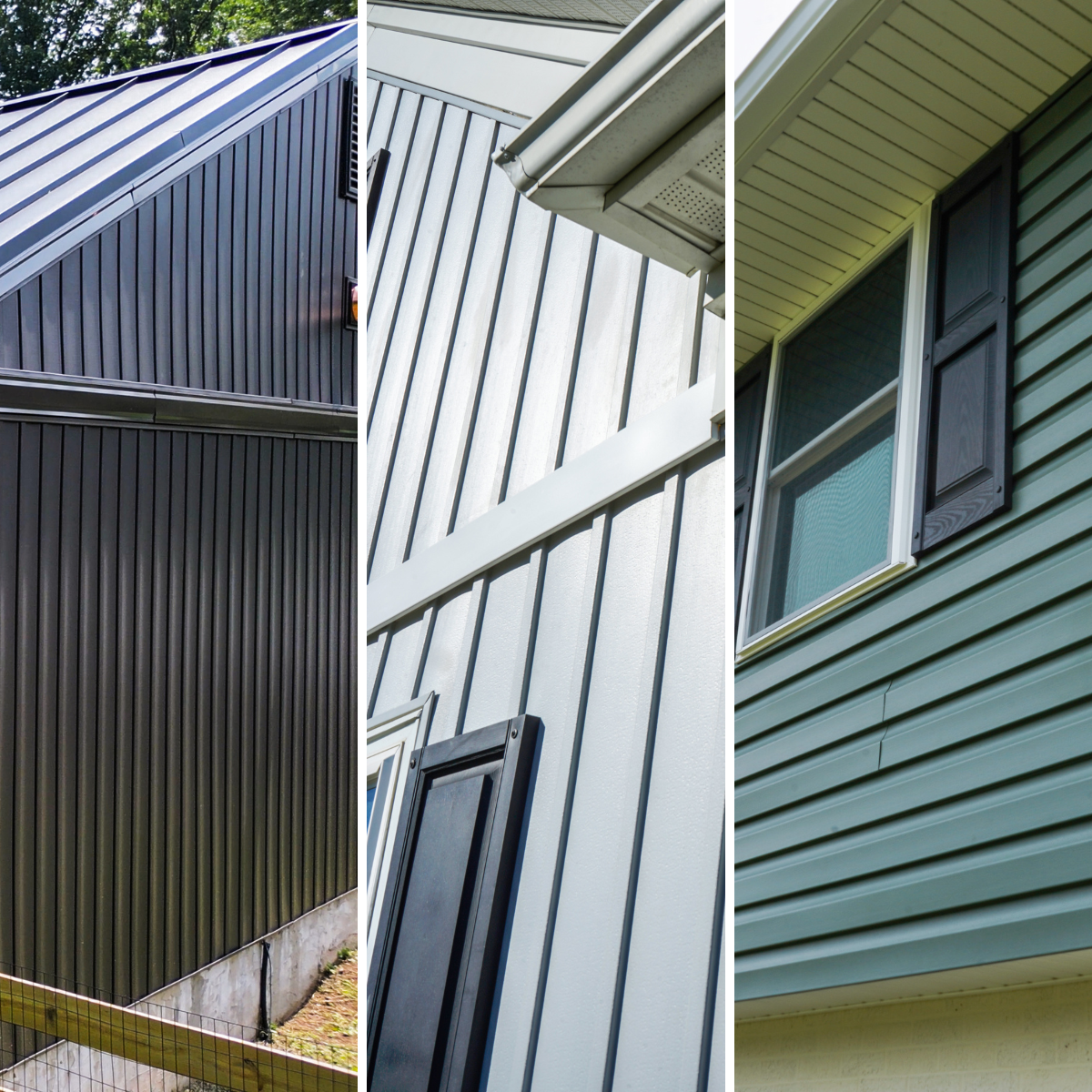
Updating your home’s siding is one of the most effective ways to enhance its appearance, increase its energy efficiency, and boost its overall value. This guide aims to help you understand the various siding options available and how to choose the right one for your needs. We recommend CertainTeed, LP Smart Side, or James Hardie siding.
Types of Siding Materials

Vinyl Siding
Vinyl siding is one of the most popular choices among homeowners due to its affordability, durability, and low maintenance requirements. Available in a wide range of colors and styles, vinyl siding can mimic the look of wood without the associated upkeep.
Pros:
- Cost-effective
- Resistant to moisture and insects
- Low maintenance
Cons:
- Can crack or fade over time
- Limited insulation properties

Fiber Cement Siding
Fiber cement siding is known for its exceptional durability and ability to withstand harsh weather conditions. It can be manufactured to resemble wood, stucco, or masonry, providing a versatile option for various architectural styles.
Pros:
- Highly durable
- Fire and insect resistant
- Can be painted in any color
Cons:
- Heavier and more challenging to install
- Higher cost compared to vinyl

Wood Siding
Wood siding offers a classic and timeless look that many homeowners find appealing. It can be painted or stained in any color, allowing for a high degree of customization. However, wood siding requires regular maintenance to prevent rot and insect damage.
Pros:
- Natural and attractive appearance
- Highly customizable
Cons:
- Requires regular maintenance
- Susceptible to rot, insects, and fire

Metal Siding
Metal siding, often made from aluminum or steel, is highly durable and resistant to fire, insects, and rot. It is a popular choice for modern and industrial-style homes.
Pros:
- Durable and long-lasting
- Fire and insect resistant
- Low maintenance
Cons:
- Can be prone to dents and scratches
- Higher initial cost
Factors to Consider When Choosing Siding
Climate
The climate in your area plays a significant role in determining the best siding material for your home. For example, vinyl siding is suitable for mild climates, while fiber cement or metal siding is better for areas with extreme weather conditions.
Maintenance
Consider how much time and effort you are willing to invest in maintaining your siding. Vinyl and metal siding require minimal maintenance, whereas wood siding needs regular upkeep to maintain its appearance and durability.
Budget
Your budget will also influence your choice of siding material. Vinyl siding is generally the most affordable option, while fiber cement and metal siding come with higher initial costs but offer greater durability and longevity.
Aesthetic Appeal
The appearance of your siding can greatly impact your home’s curb appeal. Choose a material and style that complements your home’s architectural design and your personal taste. Many siding materials are available in a variety of colors and textures, allowing for a high degree of customization.
Benefits of Updating Your Siding
Improved Energy Efficiency
Modern siding materials often come with enhanced insulation properties, helping to regulate your home’s temperature and reduce energy costs. Insulated vinyl siding, for example, can provide better thermal performance compared to non-insulated options.
Increased Home Value
Updating your siding can significantly boost your home’s resale value. Potential buyers are likely to be attracted to a well-maintained exterior, which can translate into a higher selling price.
Enhanced Curb Appeal
New siding can dramatically improve the look of your home, giving it a fresh and updated appearance. Whether you prefer a traditional or contemporary style, there is a siding option that can enhance your home’s aesthetic appeal.
Conclusion
Choosing the right siding for your home involves considering various factors such as climate, maintenance, budget, and aesthetic preferences. By understanding the pros and cons of different siding materials, you can make an informed decision that enhances your home’s appearance, energy efficiency, and value. For further guidance and professional installation, consult with a reputable siding contractor to ensure a successful home improvement project.
No responses yet